
Always clean the equipment

Trying to switch from black material to white without proper cleaning is like trying to make coffee white by adding more milk. One of the most underestimated process disciplines in plastics processing is cleaning the plasticizing unit. Especially when switching from dark materials to light colors, or when processing transparent parts. Skipping the cleaning process and hoping the new material will eventually flush out the old one is a bit like trying to turn coffee white by continuously adding milk. It gets lighter. But it never becomes truly clean. The consequences are often familiar: ❌ Black specks ❌ Color contamination ❌ Streaks and flow marks ❌ Material degradation ❌ Increased scrap rates A contamination particle that would be invisible in a black part can become immediately visible in a transparent lens or a glossy white housing. In practice, there are different ways of cleaning. ✅ The simplest method is purging with a high viscosity, low MFI PE grade. It is inexpensive and often removes a significant amount of residual material. ✅ A more effective solution is the use of dedicated purging compounds designed specifically for cleaning screws, barrels, nozzles, and hot runner systems. ✅ However, when contamination is severe or carbonized deposits have built up over time, there is often only one truly reliable solution: pull the screw and clean the system manually. The right method depends on the application. Poor cleaning is often discovered only after the defects appear on the finished part. And by then, it is already expensive.
During production trials ONE! change at a time
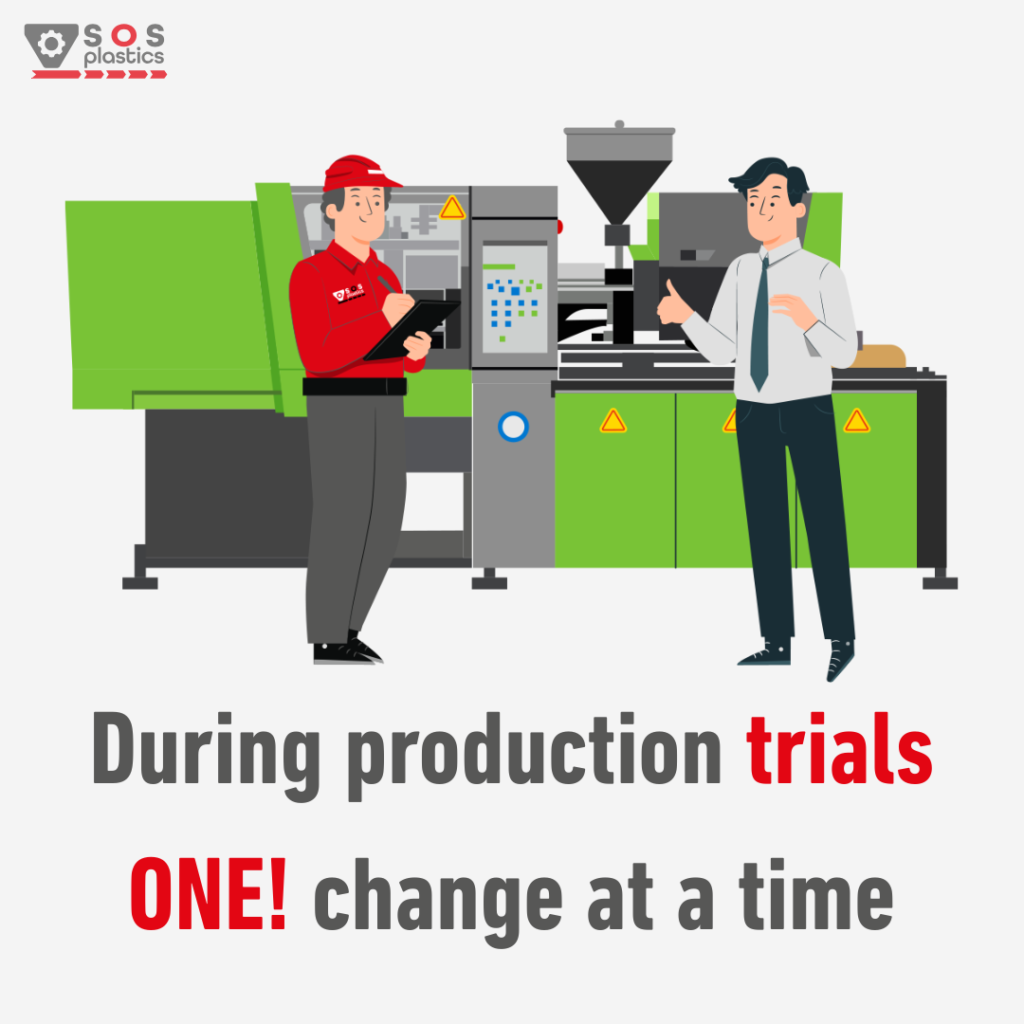
The difference between troubleshooting and chaos is usually just one thing… process discipline. Another very expensive mistake in plastics processing is changing too many parameters at once. Especially during trials with a new material, resin substitution, or process optimization, operators and technicians often start adjusting multiple settings (like injection pressure, holding pressure, melt temperature, mold temperature, cooling time, etc.) simultaneously. And suddenly nobody knows which change actually influenced the result.Injection molding is a process that needs time to stabilize.That is why only ONE parameter should be changed at a time, followed by observation, analysis, and proper evaluation of the outcome. Another critical factor is documentation.Fortunately, most modern machines allow process parameters to be saved directly in the system. But many facilities still operate older equipment without that capability. In such cases, maintaining a proper trial log becomes essential. It sounds simple, but in practice it is often ignored.During my career, I’ve seen many situations where the next operator repeated exactly the same unsuccessful adjustments only because previous changes were never documented. Process optimization without documentation is not optimization.It is just repeating mistakes faster.
Don’t keep your material in COLD place
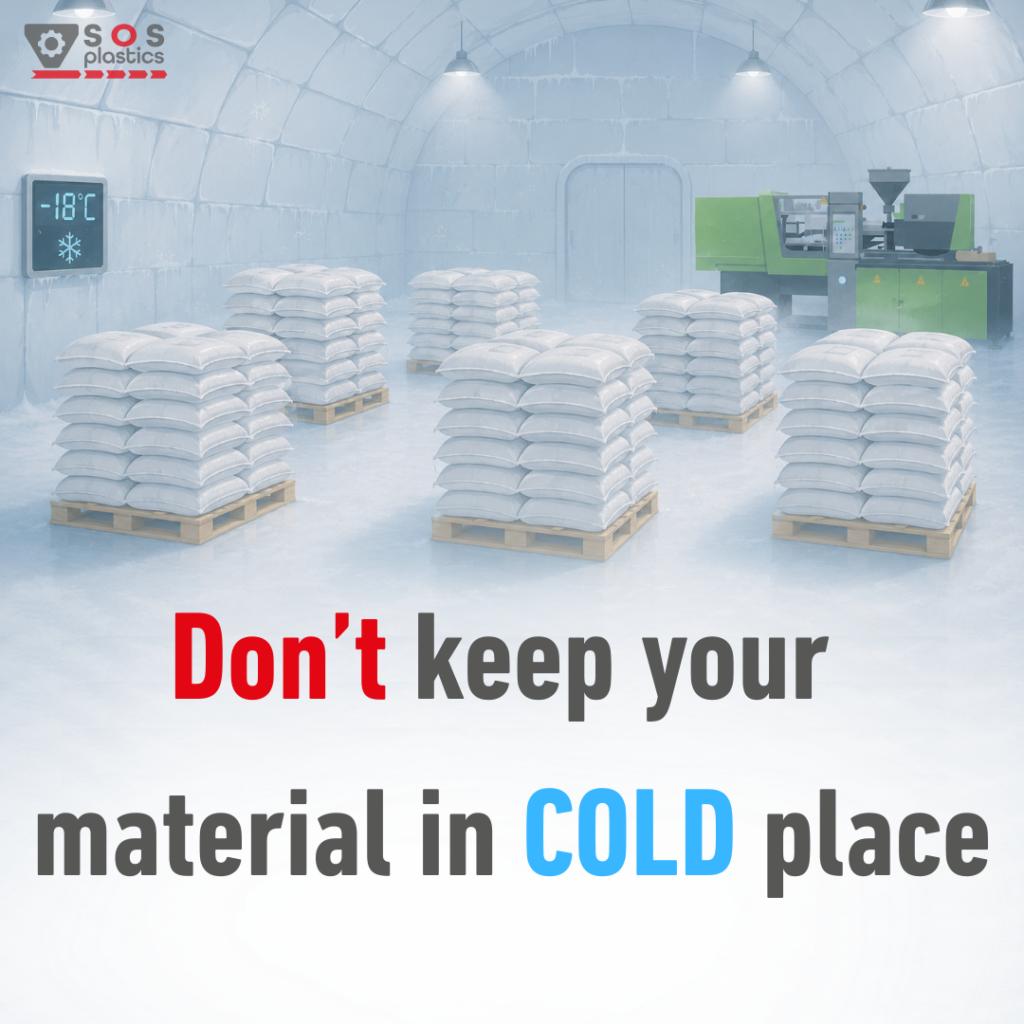
Some of the worst moisture problems in plastics processing are created unintentionally by internal logistics. Many engineering plastics are delivered in sealed aluminum bags with a carefully controlled moisture level, exactly where the material should be for processing. Not too dry. Not too wet. Ready to run. But then the material gets stored:❌ in a cold warehouse,❌ near loading docks,❌ or, even worse, outside (I’ve seen that way too many times). And this is where the real problem starts.The moment a cold bag of material is brought into a warm production hall and opened too quickly, condensation appears immediately on the granules and inside the packaging. In other words, you are introducing moisture into the material yourself. A simple production layout change can eliminate many of these issues:✅ avoid storing sensitive materials in cold areas,✅ create a temperature buffer zone before opening packaging,✅ allow material to acclimatize before processing. Sometimes the best drying strategy is simply preventing condensation in the first place.
Can you OVERDRY plastic materials?
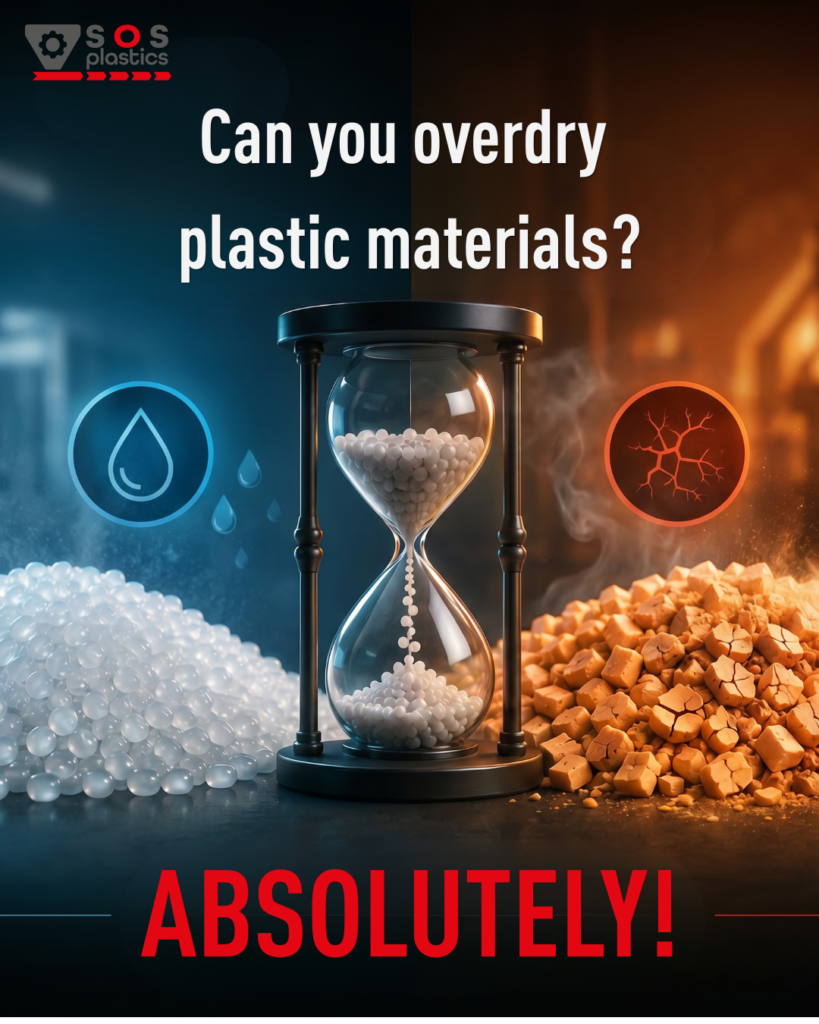
Absolutely ‼️ And honestly?This is another common processing mistakes I’ve seen in the plastics industry way too many times. Yes, hygroscopic materials like PA6, PA66, PET or PC MUST be dried.Otherwise we start seeing:• silver streaks• splay marks• bubbles• hydrolytic degradation• poor mechanical properties But modern desiccant dryers, especially molecular sieve systems, are EXTREMELY efficient.And that creates a different problem: OVERDRYING. Many polymers are delivered in sealed aluminum bags, already protected from moisture and ready for processing.Yet I still see factories drying material aggressively “just to be safe”. One of the worst cases I investigated was a large automated plant with:• central drying• central feeding• automatic conveyingThe material was sitting inside dryers for days(or even WEEKS ‼️ ) at 80–90°C before reaching the molding machines.At that point, drying becomes slow thermal degradation.And then people wonder why parts become:• brittle• unstable• easier to crack• inconsistent during processing What many processors forget is that a very small amount of moisture in materials like PA6 is not always harmful.In fact, controlled moisture content plays an important role.Water molecules act as internal lubricants between polymer chains, increasing chain mobility and improving toughness and impact resistance.Excessively dry material can become stiffer, more brittle, less stable during processing and more susceptible to cracking.That’s why “bone dry” is not always the ideal condition for processing. Then comes the second hit:The polymer is additionally exposed to very high melt temperatures during processing.That cumulative thermal history can seriously damage polymer chains. One practical tip:Do NOT store materials in cold warehouses or outside production areas.Cold pellets moved into a warm production hall immediately create condensation.Then factories start fighting moisture problems they created themselves. Drying is critical.But excessive drying can be just as destructive as no drying at all. Optimization always beats extremes.
Not Glass. Polymers.
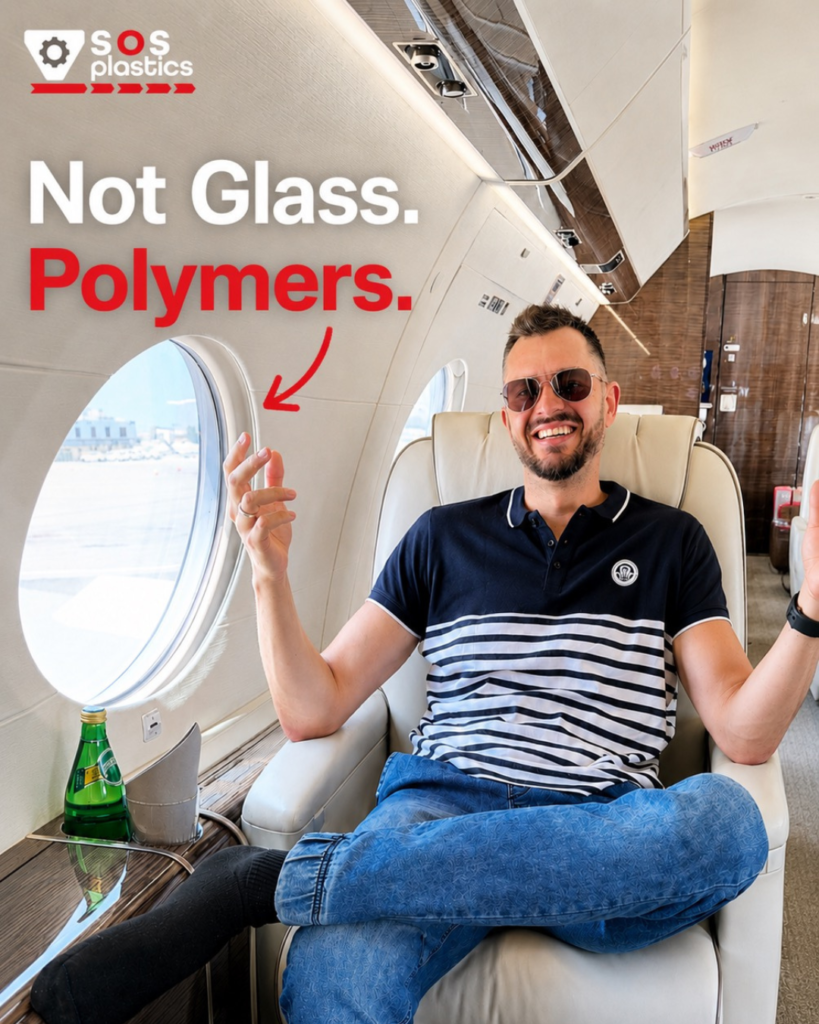
Working across both industries, polymers and aviation, I’ve got a small fun fact for you today. Most people think aircraft passenger windows are only made of glass. Well, they’re usually not. In modern business jets like the Gulfstream G650, passenger windows are primarily made from advanced aerospace polymers, especially stretched acrylic (PMMA) engineered to handle massive pressure differences, temperature changes and thousands of flight cycles.PPG’s Aerospace Business developed a material called Opticor™ — a high-performance transparent aerospace plastic developed specifically for aircraft windows. It’s lighter than traditional stretched acrylic and offers exceptional crack, flame and impact resistance. Even more interesting:the iconic rounded shape is not just about design.Rounded windows help distribute stress more evenly across the fuselage and significantly reduce the risk of cracks caused by repeated cabin pressurization. Gulfstream Aerospace is very proud of having the largest windows in business aviation sector. Sometimes the most advanced applications of plastics are flying 51.000 feet above us. And yes… we usually walk around the cabin without shoes 😉 #funfact#polymers#sosplastics
Material Overheating – case study
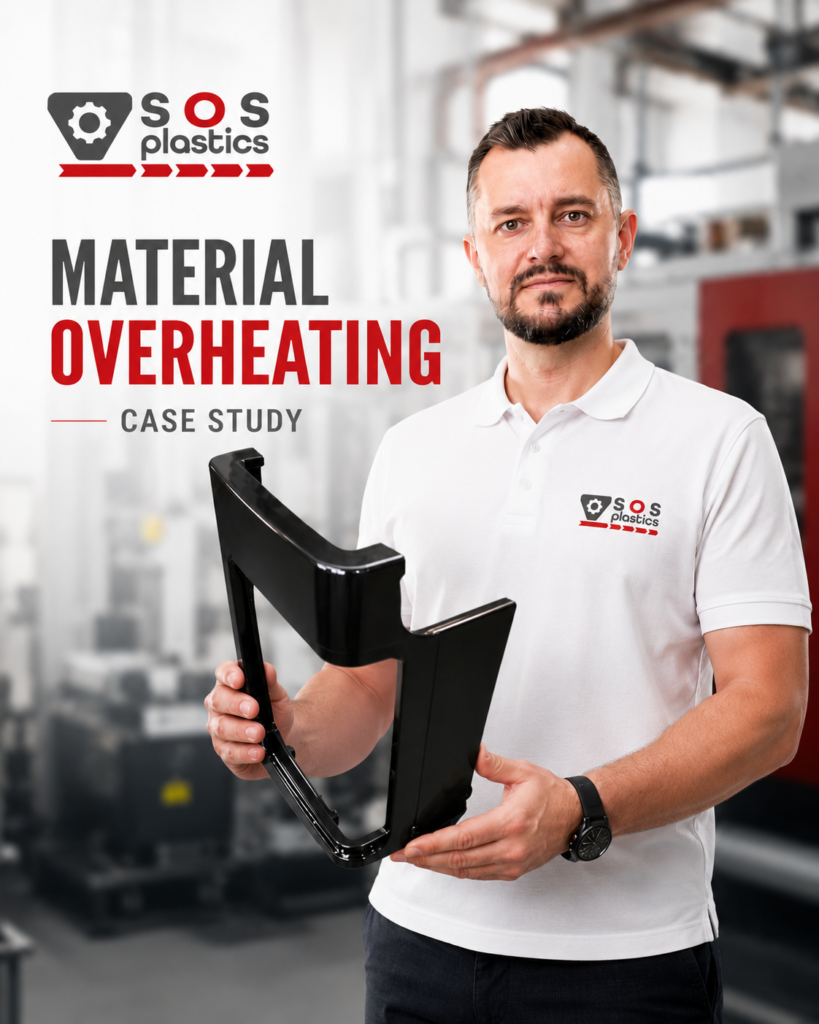
Production had to be stopped repeatedly and the mold cleaned every single time. A few days ago I published a short article about material overheating during processing. I’ve managed to find a case where I had the opportunity to verify this approach during a real production trial at a customer in Poland and the results were very interesting. The application was a glossy deep black ABS cover panel for a coffee maker.The customer had already tested several impact-modified ABS grades, but after around 30 minutes of normal production an “oil-like effect” started appearing on the surface. Production had to be stopped repeatedly and the mold cleaned every single time. After checking the process, we confirmed:– material storage was correct,– drying conditions were correct,– fresh unopened material was used during the trials. The real issue turned out to be the processing conditions.The material was running on a very large machine with a long barrel (6 heating zones), with temperatures reaching up to 280°C near the injection zone. At the same time, material residence time inside the barrel was approximately 14 minutes. According to the TDS, recommended melt temperature is 200–250°C. 1️⃣ The first step was significantly reducing temperatures in the first heating zones, down to 190°C to avoid exposing the material to excessive heat for too long.Final melt temperature was stabilized around 230°C. Additional process changes:2️⃣ increased injection and holding pressures,3️⃣ increased screw RPM,4️⃣ reduced injection speed to maintain surface quality. Trials started with natural material to eliminate any possible influence from the black masterbatch.After stable production was confirmed, black masterbatch was introduced:first at 3%, then reduced to 2% while still maintaining the required deep black appearance. Result?After 4 hours of continuous production:– not a single part showed the oil-like effect,– process stability was fully maintained,– surface quality remained consistent. This case confirmed once again that excessive thermal exposure and long residence time can easily push ABS beyond its stable processing window. Sometimes the solution is not changing the material. Sometimes the solution is simply processing the material in a way that respects its limits.
The Most Expensive Mistake in Injection Molding Isn’t Visible.
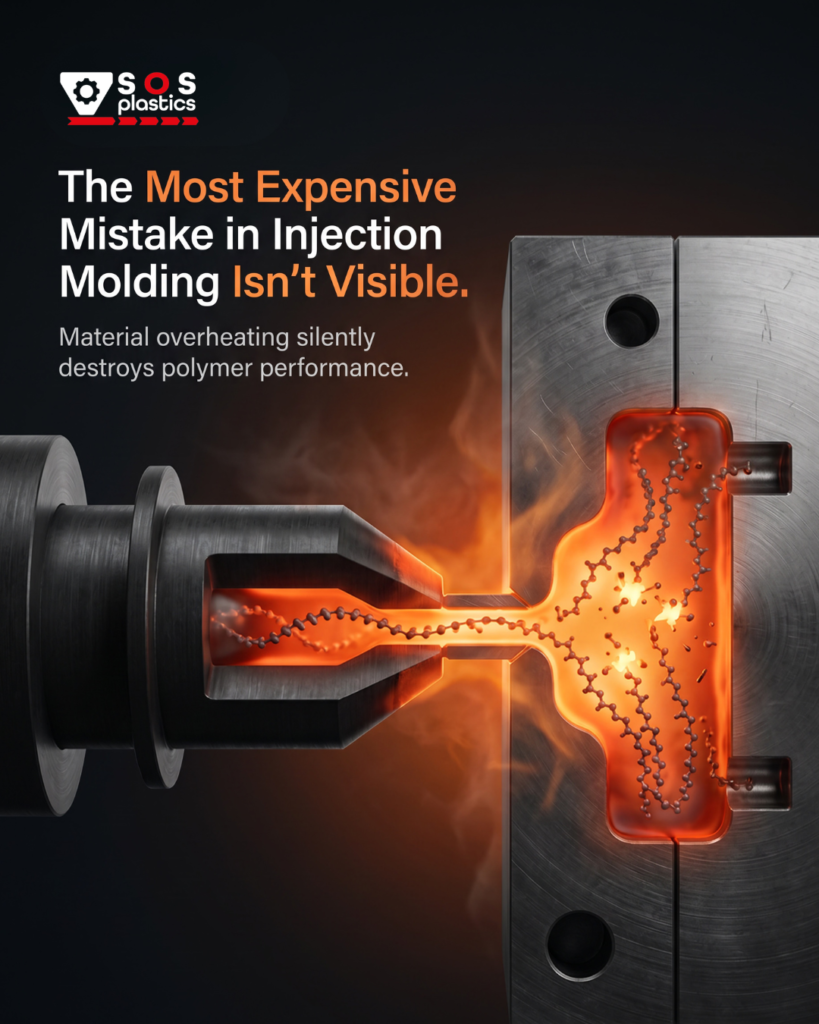
At SOS Plastics we often see that material degradation problems are diagnosed too late, usually after quality issues already appear on the parts. In many cases, the root cause is not the mould itself, but incorrect processing conditions and thermal history of the polymer 🌡️ . This post explains one of the most common hidden issues in plastics processing: material overheating. ⬇️ https://lnkd.in/dNsBx2kd
We’re now on LinkedIn!

SOS Plastics has officially launched its company profile on LinkedIn — a space where we’ll be sharing insights, real case studies, and practical knowledge from the world of plastics processing, troubleshooting, and process optimization.