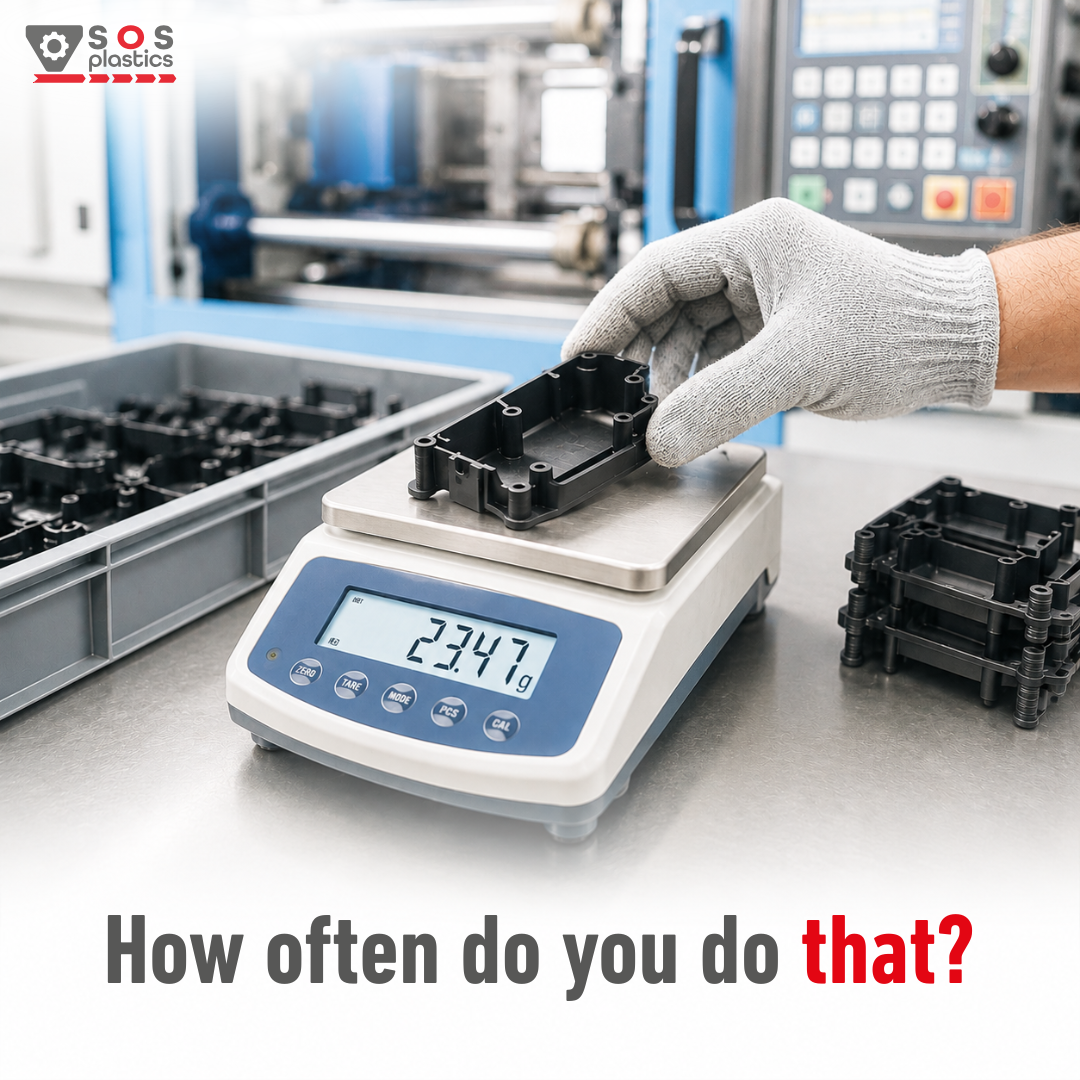
A 0,2g weight change can cost thousands in scrap before anyone notices.
Most injection molders look for defects.
The best ones look at the scale first.
Why?
Because part weight is often the earliest sign that a process is drifting.
A lighter part can mean:
• underpacking
• increased shrinkage
• dimensional issues
A heavier part can mean:
• overpacking
• flash
• excessive internal stress
The scary part?
The process can drift for hours before defects become visible.
That’s why weighing parts remains one of the simplest and most effective process monitoring tools in injection molding.
Interestingly, while I frequently see part weight checks during mold trials and process validation runs, I still see them far too rarely during stable serial production.
But there’s another catch:
Two parts can have exactly the same weight and still have very different quality characteristics. Weight doesn’t tell the whole story but it often tells you first that something is changing.
Do you monitor part weight during production, or do you rely on other process indicators?