
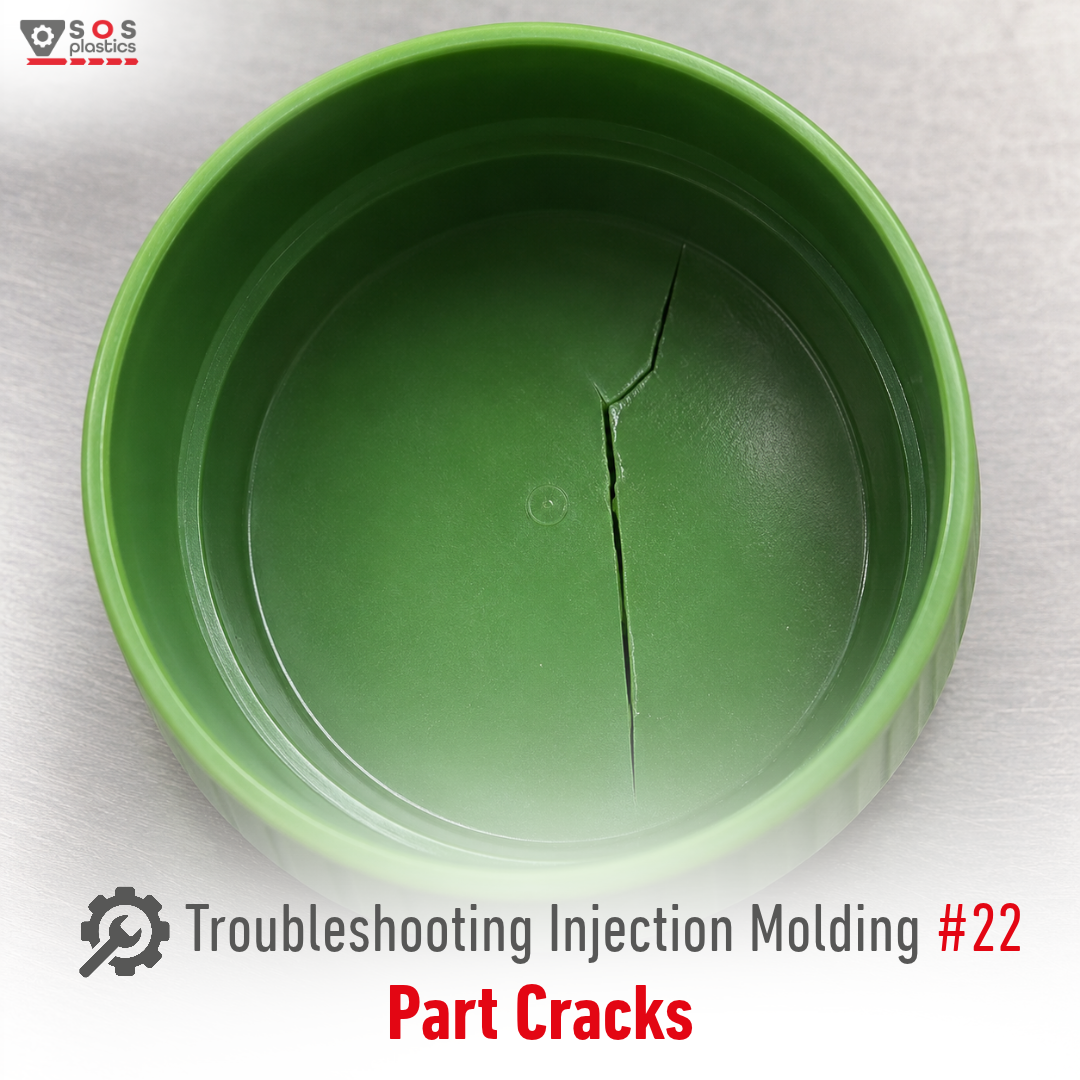
Cracks are not always caused by excessive injection pressure. They can result from residual stress, difficult ejection, weak weld lines, sharp corners or chemical exposure. Sometimes, they appear hours or days after molding.
When troubleshooting Part Cracks, investigate the causes in the right order:
1️⃣ The part sticks too tightly in the mold
➡️ Check draft angles, undercuts, surface finish and ejection system balance.
➡️ Reduce excessive holding pressure or holding time if overpacking is confirmed. Improve draft or adjust the ejection system if mechanical resistance is the root cause.
2️⃣ Stress cracking in amorphous plastics
➡️ Check for residual stress, especially around gates, corners and assembly points. Investigate exposure to cleaning agents, lubricants or other chemicals.
➡️ Reduce unnecessary molded-in stress and verify chemical compatibility. Remember: stress and chemical exposure can combine to cause environmental stress cracking.
3️⃣ Excessive stress around the gate
➡️ Inspect the gate area for cracks, whitening or stress marks.
➡️ Review gate size and location. Reduce excessive packing and optimize the filling profile where necessary. Gate modifications may require mold workshop intervention.
4️⃣ Sharp corners and stress concentrations
➡️ Inspect internal corners, ribs, bosses and sudden wall-thickness transitions.
➡️ Increase corner radii and improve geometric transitions wherever possible. A small radius can create a significant local stress concentration.
⚠️ A part that cracks immediately during ejection has a different diagnostic starting point from one that cracks several days later.
⚠️ Reducing holding pressure is not a universal solution. Underpacking can weaken weld lines and create other defects. Change one variable at a time and verify the result.
⚠️ If cracks appear after assembly or contact with chemicals, investigate the combined effect of residual stress, external loading and chemical compatibility.
Next in the Plastic Troubleshooting Series:
➡️ Unmelts
Have you ever solved a cracking problem that initially looked like a processing issue, but turned out to be caused by mold design or chemical exposure?