This one is a bit different.
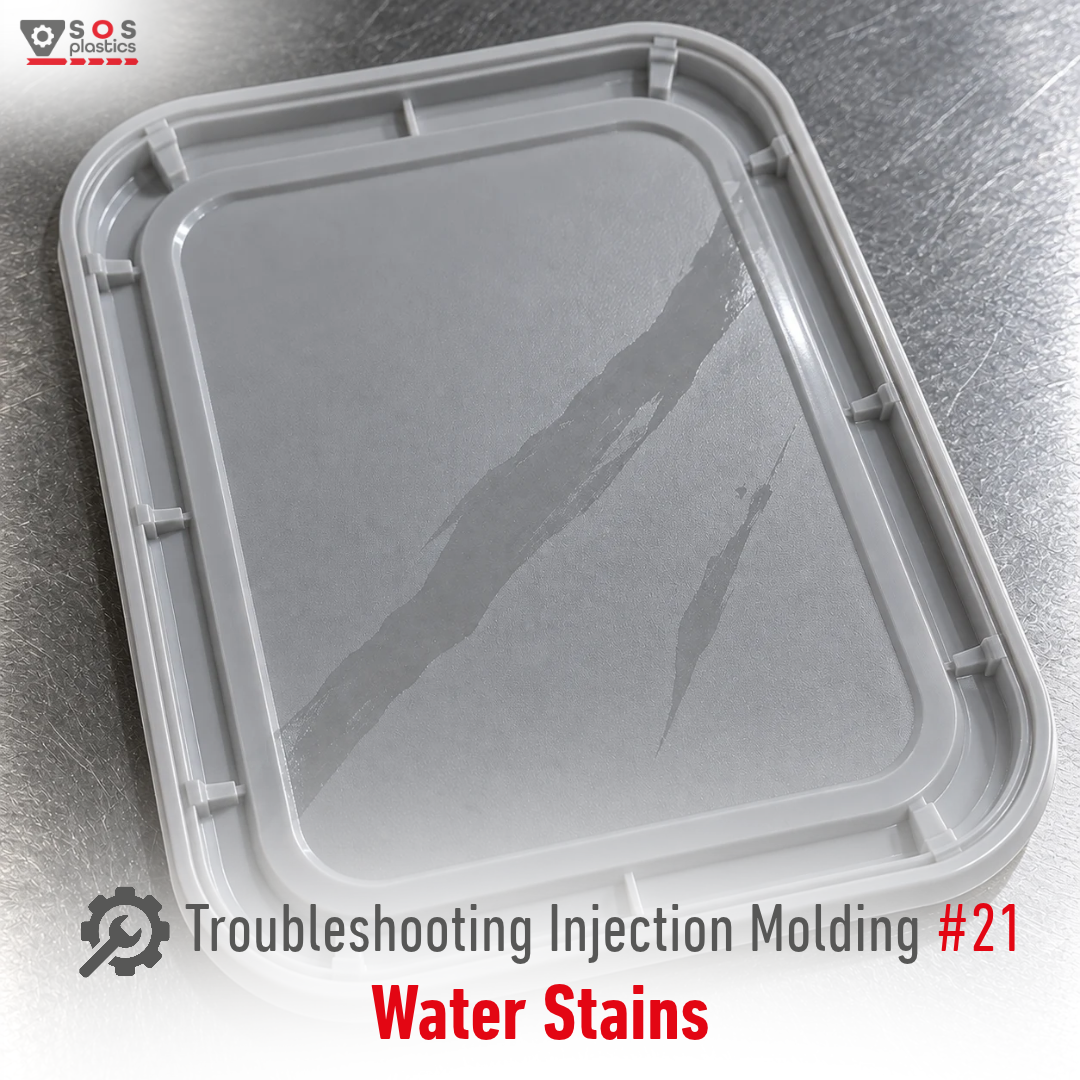
Water Stain is almost a continuation of my previous Oil Stain article. It is not one of the most common injection molding defects, and when it occurs, the root cause is usually not the molding process itself, it is the mold and its cooling system.
A Water Stain appears when cooling water leaks into the cavity and comes into contact with the molten polymer, leaving a visible mark on the molded part.
When troubleshooting Water Stain, investigate the causes in the right order:
1️⃣ A cooling hose or connection is leaking
➡️ Check all temperature control hoses, fittings and connections around the mold.
➡️ Repair or replace the leaking connection before changing process parameters.
2️⃣ An O-ring or gasket is leaking
➡️ Inspect seals around inserts, cores and cooling circuits.
➡️ Replace damaged, worn or incorrectly seated seals.
3️⃣ The mold itself is cracked
➡️ If hoses and seals are OK, inspect the mold plates and areas around the cooling channels for cracks.
➡️ Internal leakage may require a proper pressure test and mold workshop inspection.
⚠️ Dont treat Water Stain as a material-drying problem.If water is physically entering the cavity, changing drying conditions or injection parameters will not fix the root cause.
⚠️ A small leak can be easy to miss.The first sign may simply be a localized surface mark while the actual problem is hidden inside the mold.
⚠️ Check the mold before changing the process.This is one of those defects where the right troubleshooting path can save a lot of unnecessary parameter adjustments.
Next in the Plastic Troubleshooting Series:
➡️ Part Cracks
Have you ever found a Water Stain that initially looked like a material or process problem, but turned out to be a leaking mold?