
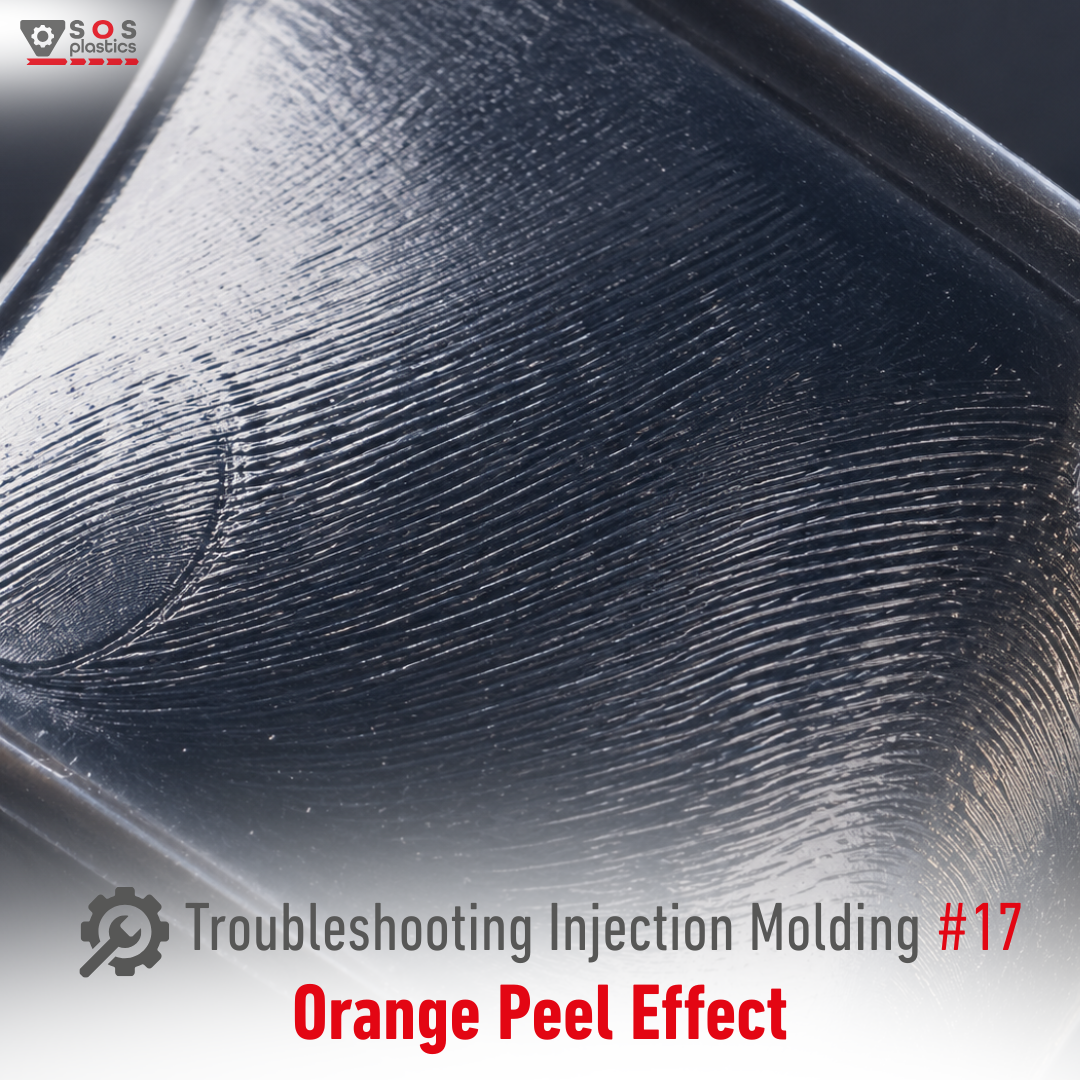
The Orange Peel Effect (or Record Grooves Effect) is a fine, uneven or rippled surface texture that resembles the skin of an orange.
It is often caused when the melt cools and solidifies too quickly at the cavity wall, while the material behind the frozen surface layer is still flowing. The result is a distorted surface that can no longer properly replicate the mold surface.
When troubleshooting Orange Peel, investigate the causes in the right order:
1️⃣ The melt solidifies too quickly
➡️ Check the actual melt and mold temperatures. If the surface freezes too early, the polymer cannot properly replicate the cavity surface.
➡️ Increase the melt temperature and/or mold temperature within the material supplier’s recommended processing window.
2️⃣ The filling speed is too low
➡️ Check the injection speed, especially in the area where the defect starts.
➡️ Increase the injection speed if the process is filling too slowly and the surface is freezing before proper replication takes place.
3️⃣ The melt is not pressed sufficiently against the mold wall
➡️ Check injection pressure, transfer position and packing conditions. Insufficient cavity pressure can prevent the melt from maintaining proper contact with the mold surface.
➡️ Optimize injection and holding pressure and verify that the cavity is adequately packed.
4️⃣ Different surface finishes on the mold halves
➡️ Check both mold halves. If one surface is polished while the opposite surface is textured, matte or sandblasted, the two sides of the molded part will naturally have different surface characteristics.
➡️ Make sure the surface finish is appropriate and consistent with the required part appearance. If both sides are intended to look the same, the mold finishes must also be compatible.
5️⃣ Mold surface condition
➡️ Inspect the cavity for contamination, deposits, damage or an incorrect surface finish.
➡️ Clean, repair or re-finish the cavity where necessary. Remember, the molded surface is largely a replication of the mold surface.
⚠️ Do not automatically blame the mold finish.
If the mold surface is correct but the polymer freezes before it can properly replicate that surface, changing the polish will not solve the root cause.
⚠️ Do not simply increase injection speed without checking the whole process.
Higher speed may eliminate Orange Peel, but can introduce other cosmetic defects such as gate blush, jetting or air-related problems. The objective is to find the stable process window, not simply the highest injection speed.
⚠️ Always verify the actual melt temperature.
The machine setting is not necessarily the temperature of the polymer entering the cavity.
Next in the Plastic Troubleshooting Series:
➡️ Cold Slug
What is the first parameter you check when you see an Orange Peel Effect on an injection-molded part?